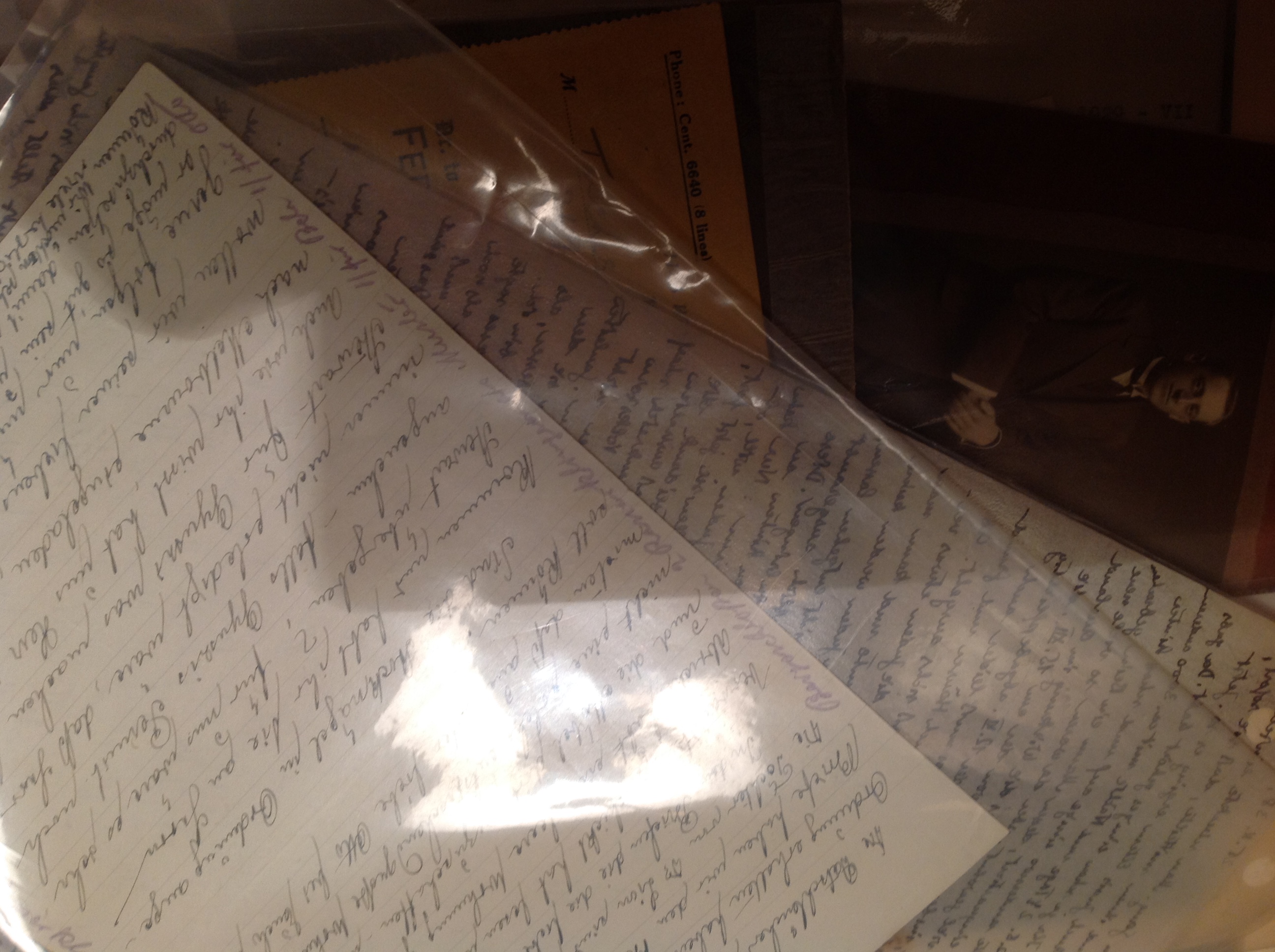
A topsy-turvy day which culminates in an exciting archive.
Podcast: Play in new window | Download
This last week has been one of recalibrating.
It all started when I took it into my head that I wanted to make a pie and began rootling about in the cellar in search of my late Mama’s old pie blackbird, – the kind that opens its beak to the sky to let the steam out. I was soon standing paw deep in wood-shavings, whole tea-sets stacked by my side; candlesticks, plate warmers, parachute silk, vases, napkin rings and tureens, to boot. Any sensible mole would have given up at that point and used an upside-down egg-cup instead, but the pie had ceased to be important, the quest all-consuming. I was about two-thirds of the way into the tea-chest when I felt something larger. There was something familiar about it, but I didn’t recognise what it was until I tried to lift it and couldn’t.
The thing at the bottom of the chest was Great Uncle Mole’s Ekco wireless. It is a beautiful object, the chassis shaped like a chocolate cake on its side, but rounded and smoothed – moulded in brown bakelite. The speaker cloth, patterned with textured triangles, stretches across a circle in the centre. Orbiting this, a dial indicates the wavelengths and once, but sadly no longer, an illuminated cursor backlit the stations as the knob was turned: Reykjavik, Oslo, Kalundborg, Luxemburg, Berlin, Ankara, Moscow.
I would watch him twiddle the knobs, refining the scratchy hiss backwards and forwards, coaxing a voice into clear articulation. He called it calibrating. I can still hear him pronouncing the word to me in his husky growl, slowly, allowing me to learn each syllable so that I could put it together as a whole: ca-lib-ra-ting.
Calibrating. I had forgotten about it, especially Uncle Ratty’s insistence that it wasn’t just wirelesses that needed to be calibrated, that we must not forget to calibrate ourselves.
I do. I forget to calibrate myself all the time.
But this week fate has engineered my life into a convergence of events conducive to calibration.
It is a rare thing for this mole to find the kind of deep stillness that allows for true listening, but it was granted to me with a day of Qi Gong in the ferny foothills of Kunanyi. The spaciousness of that listening stillness is an essential prerequisite for calibration and it was strong enough to carry me through the week. It carried over into the way I experienced my time with a writerly chum I hadn’t seen for several years. The expanse of time between then and now allowed me to calibrate temporally over a longer time. Instead of despairing at my muddling slowness I could see the distance travelled. The bumps and deviations in the middle disappeared and the distance travelled become apparent. Our conversation looped into shared passions I had forgotten, the quickening of the heart when an archival trail becomes hot, the interweaving of history and imagination, intellect and storytelling. It raised knob-twiddling questions. Am I doing what is closest to the clear articulation of my moleyself? Am I in alignment with my station now? Do I know what that station is? Am I moving through the dial to the wavelength I wish to reach, or am I floundering around Reykjavik when Moscow might be my truer destination?
Two boosters followed my day under Kunanyi. I joined my tribe at Hawarden in North Wales for virtual Qi Gong. We calibrated body, mind and breath, rocked ourselves backwards and forwards, the past and future until we found our centres and collected all our energy to focus on the present. In the background the neo gothic edifice of Gladstone’s Library glowed and reminded me of annual excursions with Great Uncle Mole and Uncle Ratty in their unreliable Morris Minor. The destination was Malmesbury in Wiltshire. We would picnic there in the overgrown grounds of Cowbridge House and then fossick around for ruins under the ivy. Great Uncle Mole had something to do with hush-hush work here in the war; something to do with radar, although no-one would say much more. Ekco came into it, too, somehow, but I can’t quite remember the connection between Cowbridge and the bakelite set back in the burrow parlour, – or the second one for that matter, the short-wave one he kept locked in a cupboard in his study and the key on a string around his neck, or so a cousin told me.
I stroked the smooth surface of the wireless, turned it around and looked more closely. There was some writing on the backing. I shone a torch on it to see if I could make it out. I found not the name of a retailer, repairer nor even of Great Uncle Mole. In my late Mama’s careful script, I read her name and the address of her Cairo posting. It was, I was sure, not only the same make but the same model as Great Uncle Mole’s wireless, but it was not his. I shouldn’t have been surprised, given that I found it in Mama’s crockery chest.
I assumed too much. Memory, too, needs recalibrating from time to time.
As I eased the wireless back back into its sawdust bedding, I felt a small lump. My torch shone into the open beak of a blackbird but it was much too late to think of baking a pie.

In which a glorious sunrise launches me into the day and sketchnoting around the novel puts me in the right zone for writing.
For Doug Neill’s sketchnoting of the interview between Chase Jarvis and Marie Forleo see: https://www.facebook.com/hashtag/30daysofgenius
Podcast: Play in new window | Download
Which I record crouching in St David’s Park and talk about long -term self-assessment.
Podcast: Play in new window | Download
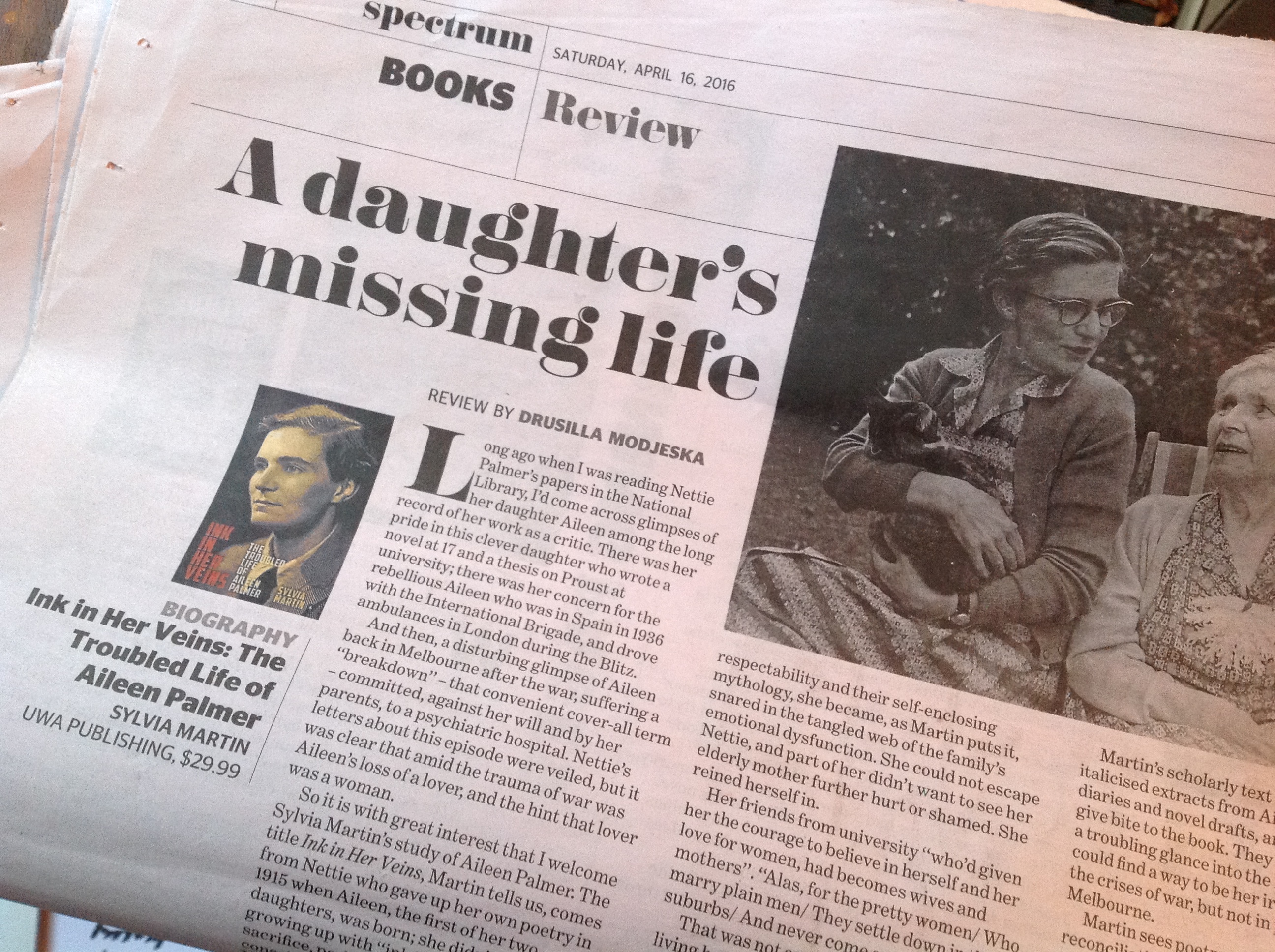
In which I reflect on lunch with a long-absent writing friend who has just published a book.
Podcast: Play in new window | Download
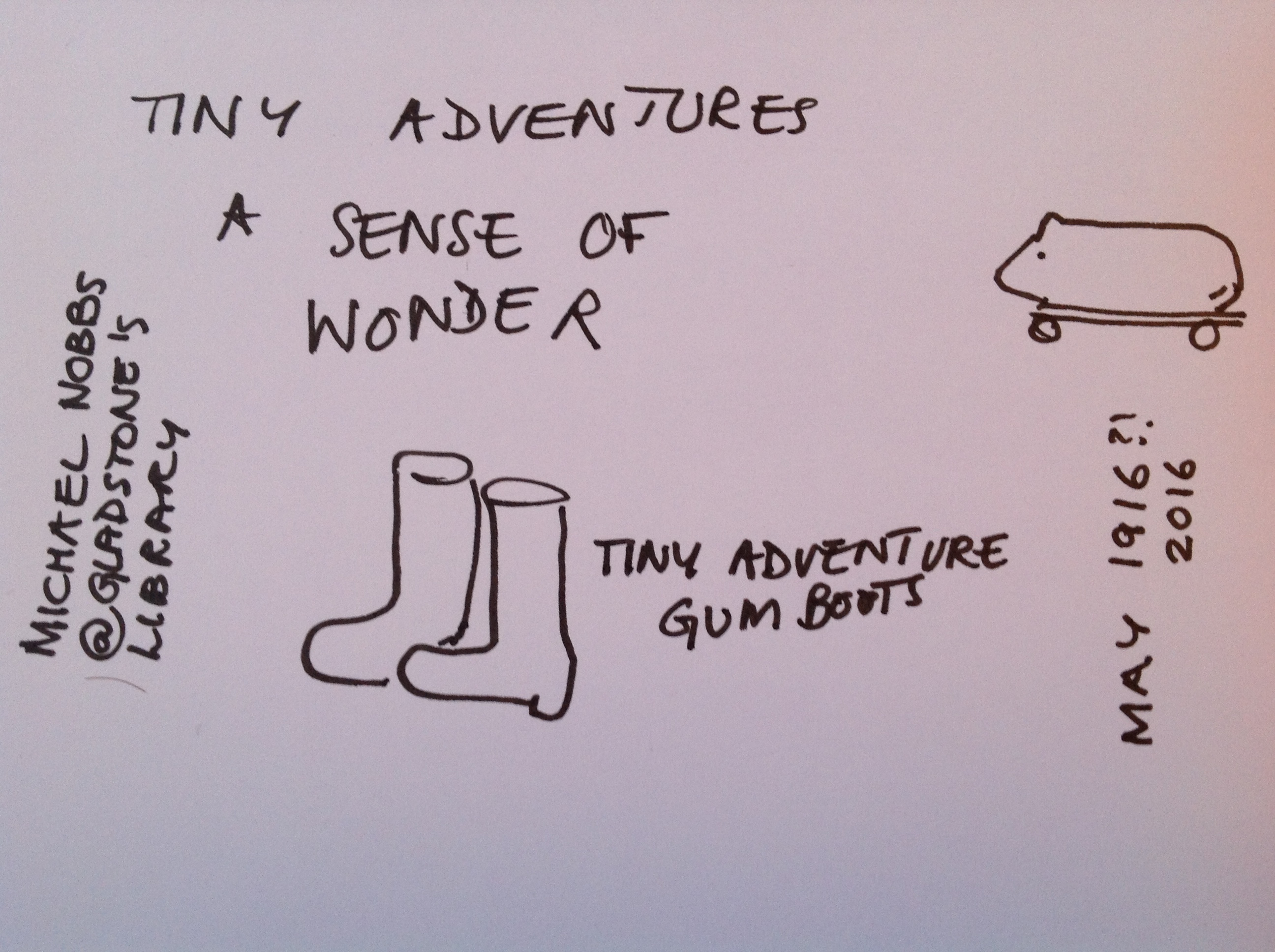
In which I celebrate a wonderful weekend of Qi Gong, bell-ringing, friendship and virtual Gladstone’s Library and capture the calm to intuit my week.
Podcast: Play in new window | Download
In which I feel a great sense of calmness after a day of Qi Gong that focussed on feeling energy.
Podcast: Play in new window | Download
Oh what mortification! Last Friday my murmurs launched themselves into the public realm before they had been fully formed. There they were, a jumble of duplications, odd spellings and other nonsense, garbling their way into the gentle minds of my dear readers. A kind chum alerted me, but just as I was poised, paws above keyboard, readying myself to smooth the words into their intended shapes, my doorbell rang. A friend had arrived for tea and then, at the very moment we were farewelling each other, the telephone rang. Three hours passed. All the while my paws itched to get back to the keyboard, and my mind was in a parallel universe of agitated readers struggling to make sense, asking themselves if I had helped myself to Uncle Ratty’s famous cherry firewater before the yardarm. Worst of all, I imagined them turning away in sorrow, never wishing to read murmurs again.
Slapdash, I heard myself saying, or was it my late Mama. ‘Slapdash’ was one her favoured soubriquets for me; that and ‘Bolshie’. Mama’s words were uttered with exasperation but oh, how I secretly savoured them. Slapdash and Bolshie co-habited with haberdashery, cutting a dash, blunderbuss and balderdash in a little chamber of my mind. They were a jolly, rackety, opinionated, swashbuckling devil-may-care bunch. They favoured bright colours, kept late hours, and played fast and loose with rules and regulations. Bolshie earned even greater cachet with the adolescent Moley when, on a clandestine visit, Great Uncle Mole’s cousin, the elderly Mr X, dropped dark hints about his activities in Archangel in 1918. It was unclear whether he was working for the Bolsheviks or the British Secret Service, but it was definitely bad and dangerous if Mr X was to be believed.
John Dryden has been credited with first coming up with ‘slapdash’. In one of his more obscure plays a character called Brain wakes up with a fully formed tune in his head (which is just as well as it has to be performed that very evening): ‘I rose immediately in my Night Gown and Slippers’, he says. ‘Down I put the Notes slap-dash, made Words to ’em like Lightning’.
Now that is the slapdash I want; the kind that happens because inspiration has run away with me and is spilling out so fast that lettering, spelling and sentences are secondary and what matters is getting those thoughts down, however higgelty-pigglety.
Over the years that chamber of buccaneers has fallen ominously silent and the whispers of slapdash and slipshod have rendered this mole paralysed at the point of exposure. Murmurs of Mole began as a way of drawing me out of my hole, committing myself to show my snout from time to time, and to waving a little something for passers-by to read.
Perhaps the garbled words that flung themselves at you last week are a sign that the chamber has reconvened, that their boisterous unconcern for finer detail and their enthusiasm for making themselves heard will, on occasion, burst through the boundaries. Will I be able to resist the force of them? Do I want to? Or shall I join them from time to time, because allowing the slap-dash its head can lead to the wonderful free-fall of words to paper ‘like Lightning’.
In which I delight in a few showers, get down to work, have to deal with external interruptions and look forward to an annual dinner.
Podcast: Play in new window | Download
In which I reconsider Mondays as days to prepare the ground for the best possible week.
Podcast: Play in new window | Download