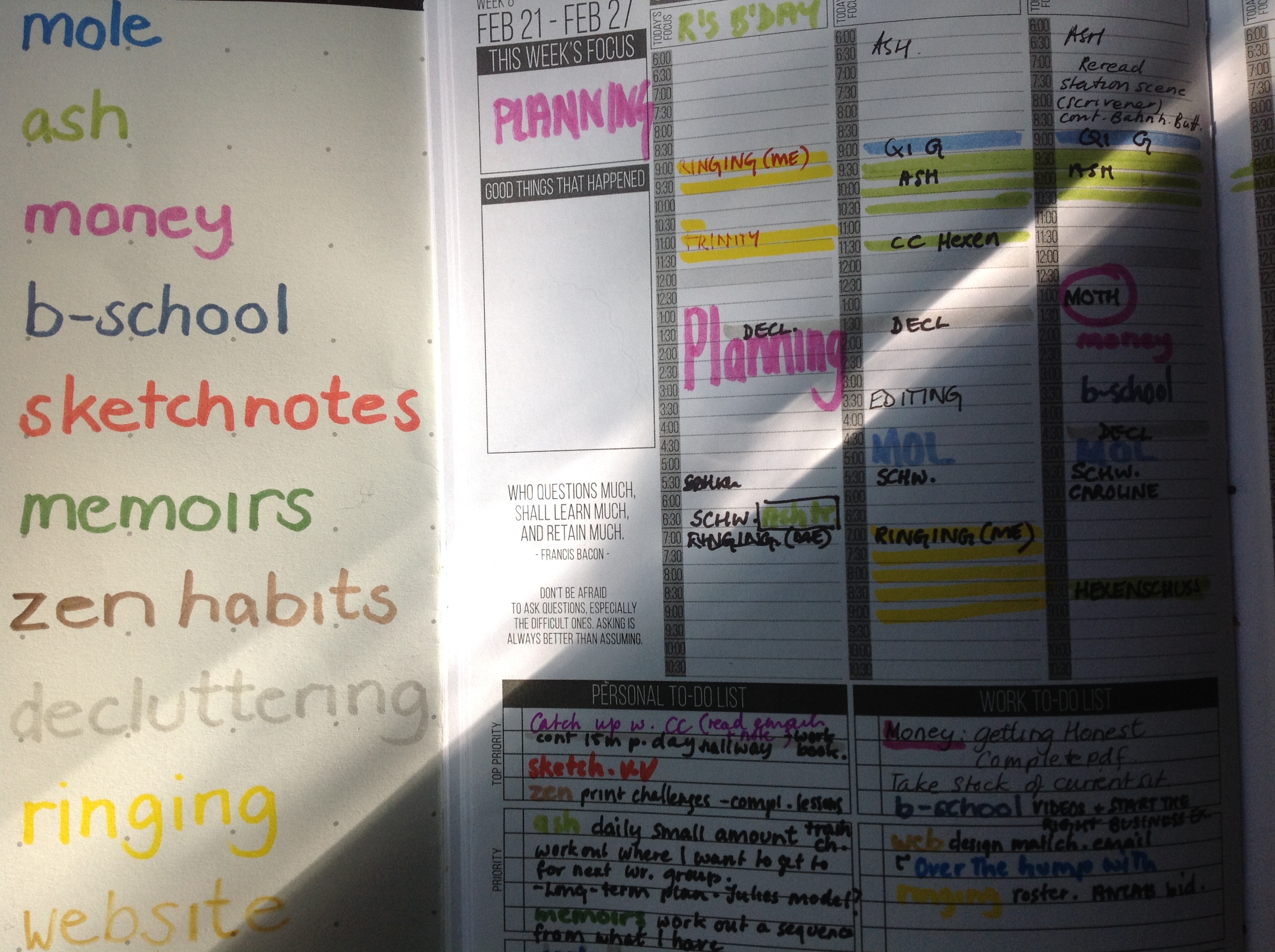
In which I try to make my various lines of endeavour more visible so that I don’t find that any fall off the wagon when I am looking the other way.
Podcast: Play in new window | Download
In which I try to make my various lines of endeavour more visible so that I don’t find that any fall off the wagon when I am looking the other way.
Podcast: Play in new window | Download
Blackberry canes. They are a weed here. Every autumn chums come and help me pull them out. Every spring, there they are again, pushing themselves through the lawn, emerging from fencelines, invading the vegetable patch. Primocanes soar over rooflines, bow down again and re-root as they touch the ground. I am torn between admiration and despair. Wanting them gone, but wanting their fruit.
I look at the canes and know I could, feel I should, put them to good use. I hear the voice of Old Felty rasping: ‘Waste not, want not!’, and remember with a shudder trying to hide from him during my holidays with Great Uncle Mole. It was futile. With leaden moleheart, I’d await his distinctive knock on the burrow door. Dahdidahdidah (he’d been in Signals during the Great War).
‘Where’s that young Moley?’ He’d demand of whoever opened the door. If it was Uncle Ratty there was a chance I’d have a short reprieve; Uncle Ratty was nothing if not inventive about my other commitments, but Great Uncle Mole had no guile and if I was out of luck, I’d be hauled into forced labour before I’d even unpacked my knapsack.
Old Felty was a papermaker of some renown but this was little comfort to me at the time. Take a moment to imagine the most horrible job a small mole might be told to do and you won’t go far wrong. Old Felty assigned me first to cutting down blackberry canes which was bad enough but not half as painful as the second stage: peeling off their prickly outer bark until my paws were like bleeding hedgehogs.
What hurt me most of all was that I was destroying the very canes that would have produced the most delectable fruit the following year – delectable fruit that might have been picked for Great Uncle Mole’s apple crumble. In those days I thought blackberry thickets were finite – although it barely seemed so when I was under Old Felty’s rule.
Now my twinges of guilt about not immediately harvesting the canes are overridden by greed. Those that by some oversight were not dug out the previous year, sprout blossom and before the petals have even thought about dropping, tight nascent fruit have begun to form in their centres.
I begin to feel myself salivating.
But blackberries – I wish I followed their example more often; they will not be hurried. Their drupelets may look dark and juicy but if they are not ready they will cling to their stems and bleed into your grasping claws. If you persist and eat them they will be sour. If, though, you wait until they drop willingly into your paw, you are blessed with sweet and juicy perfection. It is possible to wait too long. Never eat a blackberry after Old Michaelmas Day, they used to say in Great Uncle Mole’s neck of the woods. Puck spits on them.
There is a right time for all things.
And perhaps it is the right time to venture into the cellar where there is a parcel about the size of a very thick atlas wrapped, not in brown paper, but in something that is almost cloth. It is held together in a cat’s cradle of string held into place with globules of sealing wax. A rather cheap luggage label has been tied to it. Uncle Ratty has written in barely legible ball-point:
‘For Moley. Left on the doorstep by Old Felty shortly before his death, 2nd Oct 1959.
Uncle Ratty never sent it on. I found it decades later when I was clearing out his boatshed. I brought the parcel home to the Antipodes but couldn’t bring myself to open it.
And so now I carefully lift the globules of wax. I don’t cut the string but prise open the knots with my little claw. The paper is so thick it unfolds itself. There is a frame, no two. Cherry wood, I think, dovetailed to nestle into each other. One is meshed. It is an exquisite press, made, no doubt, by the master papermaker himself. There is a note attached. Old Felty’s words echo Uncle Ratty’s but they have been written neatly in thick black ink and with a calligraphy pen.
‘For Moley, who is to be my successor.’
Somewhere in my molegut I think I knew there would be strings attached to whatever Old Felty might have left for me, and I did not want to feel beholden.
But now I can see the press for what it is, admire the craftsmanship and the quality of the paper that it was wrapped in. Perhaps I feel a pang of guilt when I see a towering blackberry cane and don’t harvest it, but I know now that I am not obliged to be Old Felty’s successor, that my path is a different one.
And perhaps he knew, too. After all he hadn’t left me the cauldrons he boiled up the bast in, nor the mallets to pound the fibre with.
In which I determine to keep hold of the precious energy of the novel-writing group.
Podcast: Play in new window | Download
In which I encourage myself to work by creating inviting spaces.
Podcast: Play in new window | Download
Year of the Monkey has well and truly started at this burrow. Last night, a good chum and I were, virtually speaking, sitting at Great Uncle Mole’s desk, blueprints spread out before us, trying to figure out and disentangle the routes and circuits for murmurs of mole and Mole Out Loud. We were just pausing for a cup of tea when, out of the blue, the Mail Chimp zoomed past the open window. He saw the notes and scraps and trials on the desk and snatched them up just as they were. And so, dear readers, your inboxes were swelled with unintended and interjingled murmurs and Out Louds.
Should this happen again tonight or tomorrow, my apologies in advance.
Normal services will resume on Friday.
In which I take things a bit more easily and enjoy the gentleness of Qi Gong, meditation and cooking.
Podcast: Play in new window | Download
Here in the southern antipodes we are just coming to the end of our glorious fruit season. There is something about the ephemeral nature of these seasonal fruits, – raspberries, greengages, apricots, blackberries, peaches, damsons, nectarenes, mulberries, gooseberries, – that makes me gorge on them, delight in them while they are here. I love them all, but most of all I love the cherries.
We moles are terrible hoarders, but these fruits rot if they are kept.
And so I am eating a cherry for each item tossed. I am unhoarding my burrow to make more space to breathe, more time to take delight in what remains, more room in my mind, a move towards more flow in and out of my burrow; in and out of my molebody.
I don’t really remember cherries much from when I was a wee mole in England- they were a very, very special treat. But in the early days after we moved to Switzerland, I remember all the more an outing we made to Chronberg.
The departure from our home burrow and our nearest kin in England had been a tearful one but Grandmama Mole, who lived heartfirst and had endured more than her fair share of departures, composed her bravest face. We had relations in Switzerland, she told us. Distant, it was true, but through them it was possible to trace our lineage back to the Romans.
Tenuous, Great Uncle Mole interjected, sotte voce, and received a scowl from Grandpapa.
The clan was called Muulwürfli Ursprung, Grandmama went on, ignoring them both, – had been called that since the beginning of time. And (this was said in a dramatic hushed whisper), would these moles have a story or two to tell! Switzerland was a small country, she said. We should drop by – but to be sure to wait until late summer.
In the scheme of things, Switzerland is a small country, but not for moles. One hot day we walked, caught a bus and then a tram and then three trains and another bus to get to Frick. We tramped on to the village Oeken Oberdorf. Even then, we still had a long and dusty climb up the Chronberg. I might have balked but luckily the Chronberg was more of a hill than a mountain – and more luckily still, the cherry orchards (which by this time were a far greater lure than the ancestry), were clearly visible.
Several of the Muulwürfli Ursprung clan were waiting for us at the edge of the orchard. They had a cloth on the ground, put out bowls and bowls of cherries. They plied us with Kirsch, home-distilled. We had worked up such thirst coming up the hill that we drank far too much of it – and me such a wee mole, too.
Their accents were thick, and Papa did his moleful best to converse and translate back to us, Grandmama’s prediction that there were stories to tell, was amply proven.
Members of the Muulwürfli Ursprung clan had lived here since before the Romans brought the first cherry trees from Anatolia. The cherries might seem a boon now but the Legionnaires had settled a major camp, run roughshod over molehills, shaking the ground with their thudding feet and collapsing the tunnels of our forebears.
The story went that two Muulwürfli sisters decided enough was enough and they set up several cells of similarly minded moles in the area and orchestrated the gradual death of the settlement’s economy and a revolt within the army. Every night for several years, the moles would burrow under the treasury and steal the coins, newly arrived from Rome, that were destined for the pay of the soldiers.
What did they do with all that money, I asked, thinking about what I would do if I were so rich. Mama frowned at me. In our family it was considered bad form to talk about money. Filthy lucre, Papa called it, but nonetheless he translated.
The grizzled old Muulwürfli who had until now been telling the tale with toothless glee, looked serious. The sisters, he told us, had wanted to distribute the hoard among all the Chronberg moles, but when they tunnelled to the burrows where the coins had been stashed, the coffers were bare.
There was a lot of bad feeling, each clan accusing the others. It was generally felt that the sisters, having got all the other moles to do the heavy work, had pulled a fast one. It wasn’t true, the old Muulwürfli said, the sisters lived humble lives. But the Muulwürfli Ursprung clan became outcasts, until recently only allowed to live on the periphery of the Chronberg. Now, though, after all these centuries, they had reclaimed their ancestral burrow.
It was dusk when we departed. It would be past midnight when we got home. The Ursprung clan gave us bags and bags of cherries to sustain us on our journey home.
Today I have been feeding myself cherries to ease the flow of my dehoarding. The juice is dribbling down my pelt just as it did then. But it is not just the cherries that have precipitated me into telling you this story. The other day I stumbled across a news item.
A farmer in Chronberg, tending his cherry orchard, had seen something strange in a mole hill. He dug a bit and found a coin, and then another. Fifteen kilos of coins were uncovered – over 4000, – newly minted, dated between 274 and 296 AD. It was hard on the map to see exactly where this was but I could have sworn it was where the grizzled old Muulwürfli Ursprung had pointed out his burrow. Had he known all along – but kept the hoard? Had he died not telling his heirs – who then, in their eagerness to extend the burrow for their ever increasing families, had dug the coins to the surface without recognising what they were?
I like to think that it wasn’t the sisters who kept the stash, but that it was taken by less scrupulous members of the clan, who kept it until the broohaha died down – except it never did. Perhaps they gloated over it, but they could never cash in.
Is this a little morality tale tailored to me? Is it to remind me that hoards that aren’t allowed to breathe and move on and find new outlets are ultimately useless and only clog up their custodians?
That is not to say that I will not keep the treasures that hold the stories of my clan so that I might recount them here.
Sometimes I ponder for days about what I am going to write. A stray word seen or spoken, the odd observation, or maybe two or three jostling together, and one thing will lead to another until I discover what it is that I want to say. But there are other times when I am distracted and forget to lay myself open to the seeds of inspiration. I become paralysed by the terror of a deadline and forget to lose myself in the delicious riches of my cellar.
I sit here, pen in paw, hoping that the first word is inching its way through the endless circuitry of my body. I am barely unconscious of its origins; have no sense that it is aware that I have a timetable. It dawdles, hovers somewhere in my gullet, loses itself in bye-ways, is lured into conversations with other words who are arguing about which is to go first. None wants to lead. I am waiting this end for it to arrive – have been waiting for some time. Will I recognise it when it arrives? Will we embrace? Will it be a complete stranger? Will it thrill or fall flat on its face?
How does a word reach a paw? How can I jolt it along? Papa paced up and down. Like a tiger, Mama would say. The threadbare track on the turkey rug bore witness. His words when they came flowed, exquisite, poetic, but rare. Mama’s came to the fore through sheer force of will, but were prosaic when they arrived, having been marshalled on command and not been allowed the time to build distinctive characters.
Great Uncle Mole always typed. The machine was essential, a big and heavy thing that clacked and pinged, a mechanical intervention between his body and the paper. Watching him, one might almost believe that the letters on the hammers conveyed themselves to him before his paws had even hit the keys. something mechanical and external to himself.
Uncle Ratty was a verbal chap – could spin a yarn that lasted for weeks. A tale might be serialised night after night for the whole stretch of a holiday and on the last evening all the threads were drawn together for an astonishing denouement. But ask him to write so much as a shopping list and he froze. He needed to talk himself around a thing to bring it to life, not pin it down.
His sister, Celestine, who had a higgledy-piggledy education at the barge school had no such qualms. The barge creatures were given so much roaming time, so much license to paint and mull and shout and sing bawdy songs, that Celestine knew no limits when it came to writing – nor anything else. Her pen, filled with green ink, excelled at all she touched and, oiled and fluid, made its way through three doctorates as she lived and loved her way through Paris, Barcelona, New York and Berlin.
I sit here trying channel her, or if not her any one of the others. I feel the words getting stuck en route. My words are neither marshalled, nor fluid, they are not to be coaxed by mechanical intervention or green ink, or lulled with whisky or wine or chocolate. I try to send them messages of encouragement but they are timid creatures, too frightened to emerge. The word-in-the-making I am waiting for – and its pals, – are more comfortable in that amorphous place where anything is possible; before letters have coalesced into words and words have coalesced into sentences.
If they come out they might be pounced upon before the quill has even scratched the paper.
Rain! Glorious rain. Umbrellas up, gumboots on, thunder rolling, the garden looking sprightly for the first time this year. Long soaking rain overnight. A little respite in our droughty summer, or a glimmer even of the autumn to come?
It is the kind of rain that descended on the woods and fields and rivers around Great Uncle Mole’s burrow for weeks on end. It is the kind of rain that sent us scurrying off to pick blackberries, and it is the kind of rain I associate with mushrooming. The blackberrying might happen on the spur of the moment – a wet afternoon, the blackberries ripe. The reward for the scratches and the thorns in our paws would be Great Great Grandmother’s Special Crumble, a recipe handed down from molemother to moleson, and baked by Great Uncle Mole in the welcoming fug of the kitchen.
Mushrooming, on the other hand, was a rather more organised affair – not the meticulous, rule-following kind of organisation that Great Uncle Mole went in for (which is awfully useful when you are building a tunnel) but the planting of germs of anticipation that Uncle Ratty was rather a dab paw at. He’d lay the foundations with the brewing up of his personal stock. He never revealed the ingredients, but a day or two before our outings he would send me off on multiple foraging expeditions so that in a sort of pelmanistic way I now feel I could make a reasonable pawfist of reproducing it. Besides it was generic rather than exact – Uncle Ratty was incapable of creating the same thing twice. He would also spend hours in the cellar, emerging cobweb-coated and smug with a very particular kind of wine. Alas, I cannot remember what it was.
For weeks beforehand the two chums would go on long walks together, Uncle Ratty leading with his intuition and Great Uncle Mole trying to keep up with maps and the policeman’s notebook he kept to jot things down. In the evenings they’d pore over the maps, discussing copses and rotting logs, mossy banks and hedgerows. By mushroom day I’d barely be able to contain myself with the anticipation. Great Uncle Mole and I were the basket carriers. Uncle Ratty nosed them out, plucked them, twirled them in his paws, and named them. Oh, the names: Glistening Inkcaps, Big Ears, Scarlet Hoods, Powdery Brittlegill, Trooping Funnels, Hedgehogs, Slippery Jacks, Horns of Plenty, Judges’ Wigs. And the colours: purple and yellow and red, although it was often the brown ones like Wood Mushrooms, the Oak Boletes and Chanterelles that tasted best.
A couple of weeks ago I was seduced by the fungi stall at the market. These are Asian mushrooms- shitake, and delicate oyster mushrooms cultivated on logs, growing in clusters: pearly grey, yellow, white. I filled my basket.
Uncle Ratty’s risotto was so firmly established in my mind that my mouth was watering by the time I came back to my burrow. I laid my bounty out on the table and admired it but then, oh woe and dearie me, a great chasm opened between the vision and the reality. There was no arborio rice. There was no rice of any kind in my larder. Nor had I prepared a stock. I could forage it was true, but somehow I no longer had the heart for it.
I had been so fixated on the mushrooms and the vision of the Uncle Ratty’s risotto that I had not stopped to think about the less glamorous ingredients, nor the preparation.
Were I to take note, how often might I catch myself – in my work, in my quotidian life, – doing the same, being lured by an imagined perfection but not taking account of the ingredients, ignoring the groundwork needed to achieve that vision?
And yet if only I would allow myself plenty of time to sit down quietly and loosely, colourfully, plot things out: what are the ingredients? What is the sequence? If I would only remind myself that it is in the doing – the selecting, the measuring, the stirring, the sniffing and the tasting that the anticipation enters every cell of the molebody, and that the means and the end become one.
January is slipping by in summery non-time, and this mole is mapping out intentions, experimenting with rhythms for the coming year. One part of me is trying to disengage itself from the other which, for decades now – over half a century, has heroically, but misguidedly, been chivvying me along to match the ever-speeding pace of the external world.
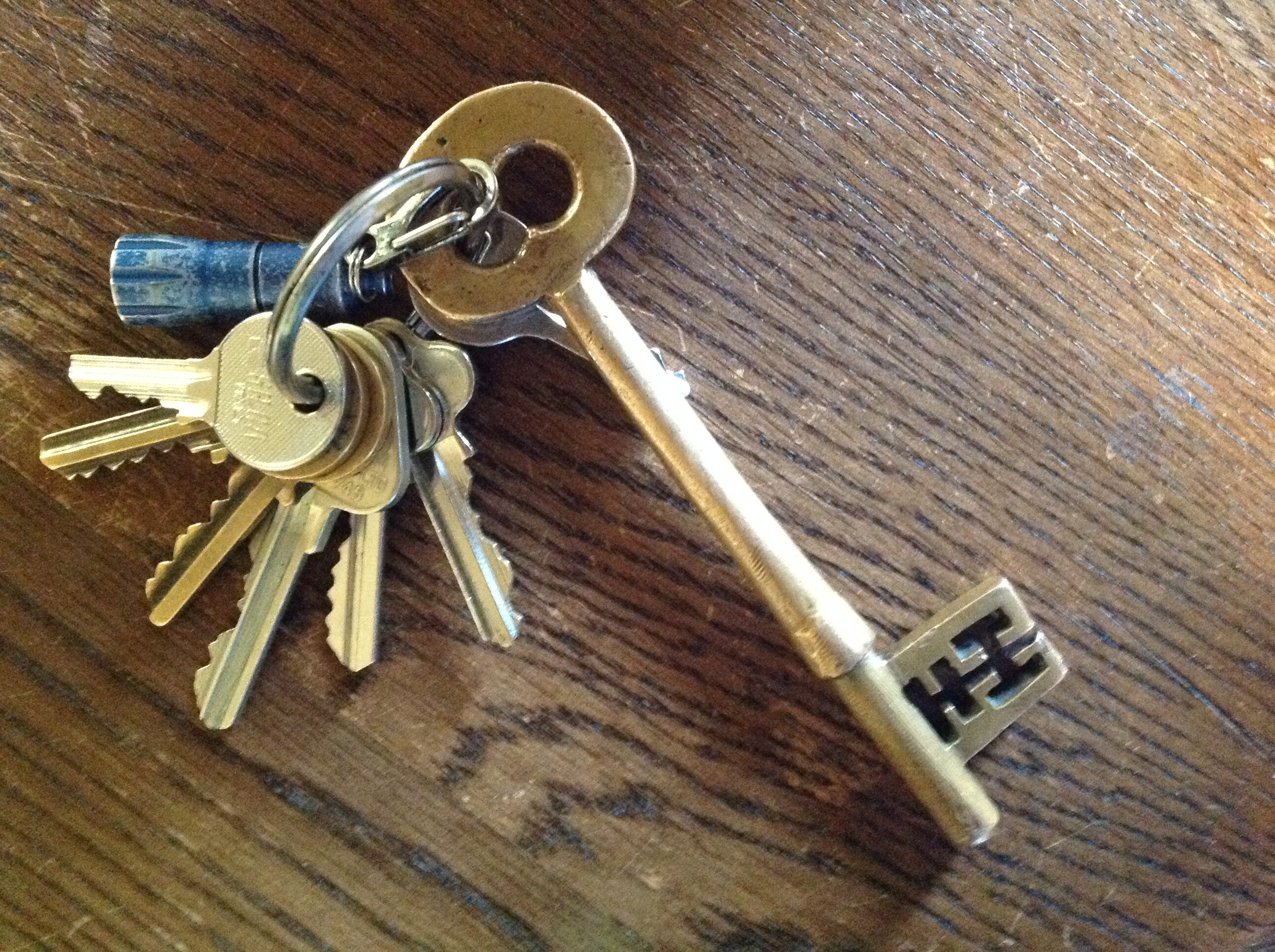
When did this self-chivvying begin? The England in which I spent my early molehood was cracked and threadbare, exhausted still from the war. Trains were always late if they came at all. You would think my snailishness might have gone unnoticed. But no. Perhaps I had been gazing at the sky or was lost in some rabbit-hole of my own when the teacher called me to the front. She turned me round to face the class and wound a phantom key between my shoulder blades as if I were a mechanical toy. Oh the mortification! I can still feel it in my moleheart. Did I speed up? I don’t think so. But I did realise that I ought to. My inner Chivvy was born.
When we upped burrows and migrated to Bern I had no idea how regular I would need to become. The ancient clock, the Zytglogge, dominates the old town. Everything was exakt. At school, our slates had to be placed in parallel to the desk top and our chalk-pencils lined up one centimetre from their sides. In our six-family burrow we had a communal laundry which had a strict roster. Fortunately the muddiness of a seven day week could be controlled, because Sunday was snipped off. As the fugitive Axel in John le Carré’s A Perfect Spy remarks from the safety of his laundry hide-out:’In Switzerland everything that is not compulsory is forbidden.’ And it was strengstens verboten for moles to do their washing on a Sunday.
It was perhaps the decade that Switzerland was at its most punctilious. Hans Hilfiker’s iconic clock gleamed on every railway platform. It was uncluttered by numbers. The minute hand jerked forward every 60 seconds so that it was never dawdling in the anarchy of whiteness between the markers, but it was the second hand that took pride of place. Red and shaped like a guard’s baton it moved continuously, a fraction fast, so that it might pause for 1.5 seconds just before the hour – just enough time for the railway guard to slice his baton down and the train to begin to glide out of the station on the hour.
And yet, and yet, Bern has had its fill of artists, dreamers and wanderers. It’s inhabitants still gasp at the beauty of the alps on a clear day. Its language has humour and lilts slowly. Bern spawned Robert Walser, the most unpinnable and poetic of wanderers and Adolf Wölfli who created calendars with thousands of days and maps that conflated Bern and China, art, currency and music.
And it was in Bern, as he was travelling along Marktgasse on a tram that Albert Einstein looked back at the Zytglogge and got the first inkling of his theory of relativity. Time was not a fixed thing, universally applicable, nor was the experience of time universal. It varied according to where you were standing.
We may be bound by seasons, by night and day, but who is to say how we mere earth creatures arrange our time? Between 1793 and 1805, some parts of Switzerland found themselves being dragged into the radical calendar of the First French Republic. There were thirty days to a month split into three days décadi of ten days. Each day contained ten hours, each hour 100 minutes, each minute 100 seconds. It was configured by a committee of astronomers, mathematicians, politicians, a naval geographer, a chemist, an actor and playwright and a horticulturist. And so its metric precision was imbued with more than a nod at the natural world. The year began on the autumn equinox and was divided into seasons from thereon. The months had names that reflected the weather. We would now be in plûviose, the rainy season. And today would be perce-neige, or snowdrop, the saints having been dislodged by the secular government. Some days were dedicated to animals and agricultural implements like bale-hooks or watering-cans.
It is time to for this mole to challenge the Ancien Regime of the Chivvy, the rule of the second hand; time to be guided by my own rhythms, my own pace.