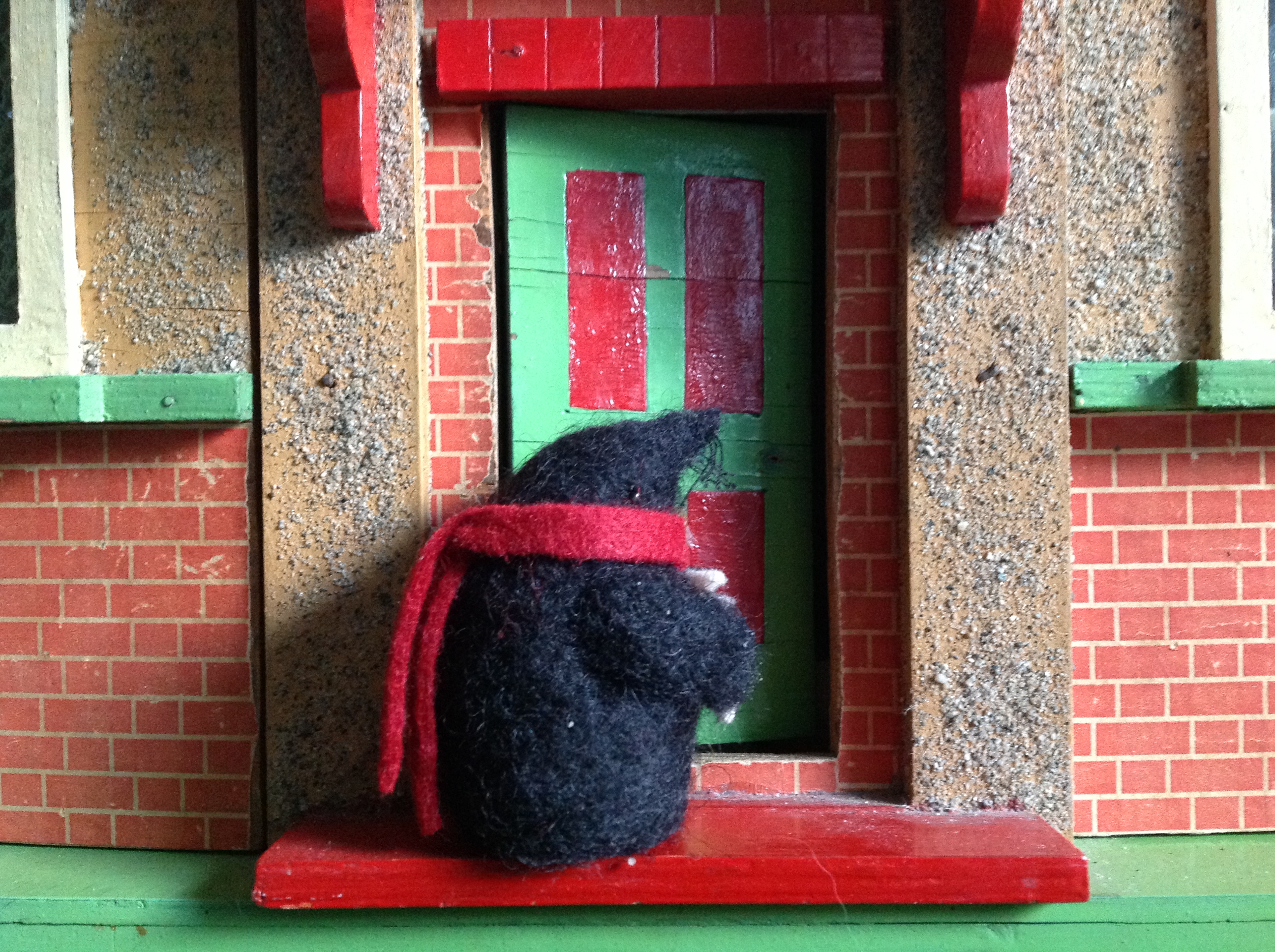
In which I contemplate being able to take a step back during my upcoming sabbatical.
Podcast: Play in new window | Download
In which I contemplate being able to take a step back during my upcoming sabbatical.
Podcast: Play in new window | Download
I dreamt of Great Aunt Septima last night. It had been years since I last thought about her. The details of my dream evaporated when I woke up, but the reason she manifested was, I think, prosaic; I had been reading Agatha Christie’s The Seven Dials Mystery before I nodded off. But I also think she was the manifestation of some subterranean mulling I had been doing, and that she held the answer in her paws.
I’m not sure if I have mentioned my Great Aunt Septima to you before; if I haven’t it may be because Great Uncle Mole had a great many siblings, almost all older than he and several, alas, had perished by the time I was born. But I did once have occasion not only to visit Great Aunt Septima, but to stay with her. I was eight at the time.
When I was quite a bit older Great Uncle Mole told me that according to family lore, this particular sister, oddly positioned about half way between a batch of older siblings and a batch of younger ones, extracted herself from the hurly burly collectivity of the brood and grew herself up in her own very particular way.
She came to believe that she had been somehow chosen, that her name had not just been a convenient moniker picked for their seventh child by unimaginative and exhausted parents, but rather a sign from the heavens.
It was accident that I came to be staying with her. Mama and Papa, who both worked in some hush-hush field, had been urgently called up on some mission or other. Great Aunt Septima was the only relation we knew in London and so it was on her doorstep in Seven Dials that we we landed. My first impression was that her eyes were both sharp and glazed, and that she was a very old mole indeedMama explained their predicament. Great Aunt Septima asked how old I was. ‘Seven’, my parents answered in unison. Mama placed her paw in front of my snout lest I should squeak out ‘eight’, and Great Aunt Septima decided that was propitious. ‘Seven days’, she said. ‘No more, no less.’
No-one had warned me. The burrow was a Wunderkammer of all things seven. It was crammed. Multiples of seven were favoured, from doorstops and hot water bottles to places laid at the table. The walls and ceilings were painted with depictions of the Seven Heavens. On the back of my bedroom door hung a page torn from a 1925 edition of Mahatma Ghandi’s Young India with a list of the Seven Social Sins:
Wealth without work.
Pleasure without conscience.
Knowledge without character.
Commerce without morality.
Science without humanity.
Worship without sacrifice.
Politics without principle.
My seven days were filled with instruction.
‘Your soul, young Moley, is made up of seven senses, each influenced by one of the planets. Fire is what animates you, earth gives you physical sensation, your voice comes from water, with air you can relish the food before you, the mist gives you vision, flowers allow you to hear, and the southern wind endows you with the power to smell.’
And then there were the seven stages of mole. I was transitioning, she said, into a personality of my own. I knew of course that I was not transitioning but was firmly in the next stage already. ‘The Romans tell us that the Soul rejuvenates every seven years’.
She taught me to cross my 7s, which gave the digit proper substance, she said. She’d learnt this in Königsberg while investigating the seven bridges that had provided Euler with the seeds of his graph theory (this was a bit beyond me but she gave me a map of the city so that I could see for myself whether I could find a route only crossing each bridge once). I wondered whether Königsberg was as rackety as Seven Dials.
If my mind appeared to wander she would slap a Tarot card in front of me – always the 7th card, the chariot, which she told me symbolised the need to focus, and if it wandered for longer she would reverse it. ‘That’, she would say, ‘points to an inability to see things through.’ When I was being attentive she told me I had the Chinese lucky number seven which meant I would grow to pursue a subject until I got to the heart of a matter. ‘But’, she warned, ‘some lucky sevens are too afraid to accept the truth when they discover it.’
On the Seventh day my bags were packed, and my Papa, looking distracted and slightly flushed from running, turned up on the dot of 7pm, to pick me up.
Would I see Great Aunt Septima again? No, she had done what she could to implant my sevenness. Now I would be on my own. Then she relented. I could, if I liked, come again when I was fourteen. I did keep in touch with her, a letter or two each year. Hers to me were always headed ‘7 Seven Dials’ (although it was not exactly true), and dated 7th September, no matter when they were sent. But when the time came for me to visit her again she had died, and besides, I had other fish to fry.
Apart from reading The Seven Dials Mystery, before I nodded off, I had been mulling about how I seemed to be making little distinction between my days, and wondering how to create a bit of a rhythm, time on and time off, time for one project or another.
Seven. That was it. Every seventh week I shall take a sabbatical. On those weeks mole will be silent – no podcasts, not even a murmur.
A sabbatical promises time away from the general scheme of things, time to explore or focus on something in depth; time to look at the sky as the ideas loosely construe in my mind.
I shall begin my first sabbatical tomorrow evening.
Thank you Great Aunt Septima.
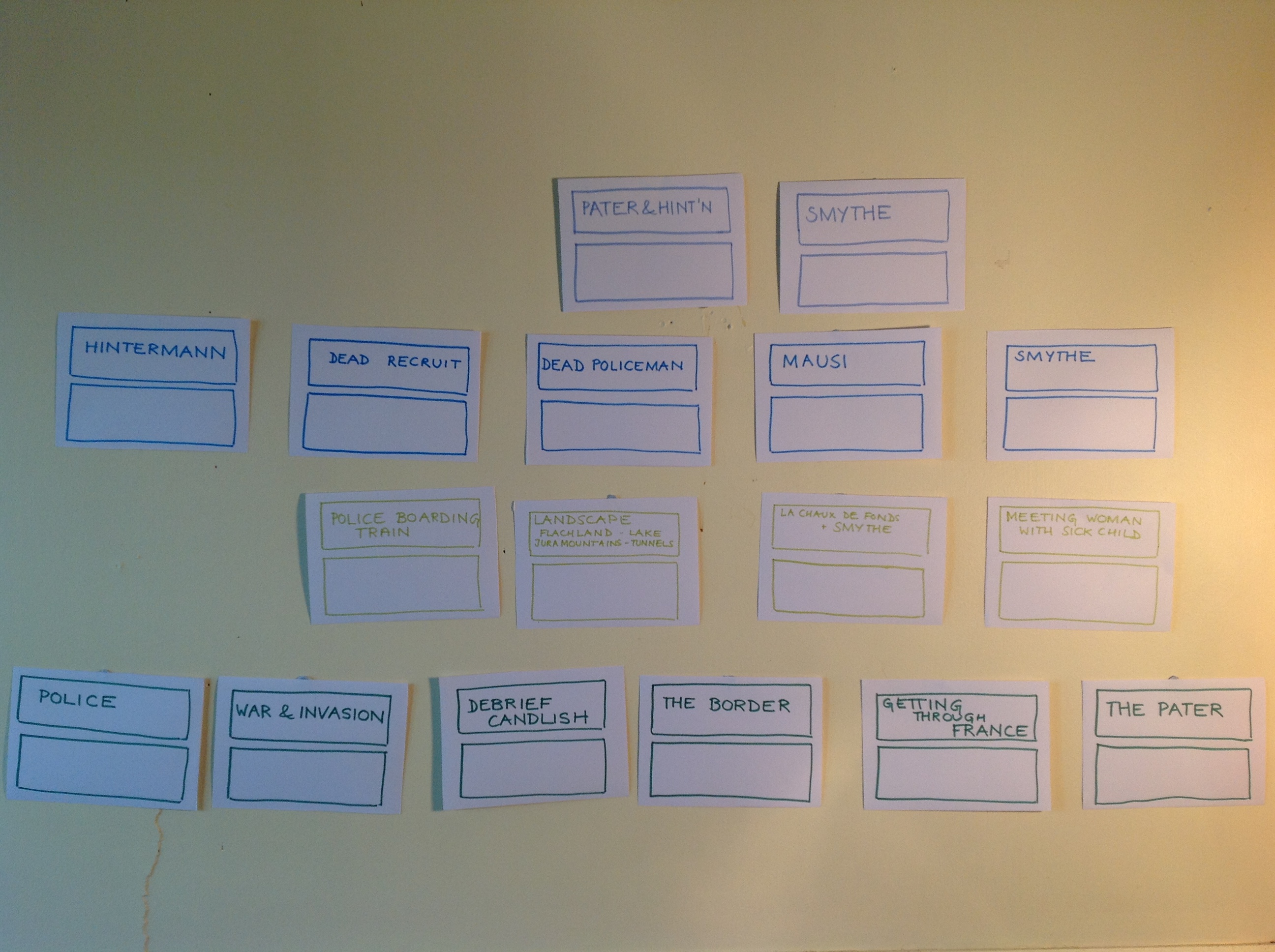
In which I break down the next section of my book onto cards during a Verbal to Visual session.
Podcast: Play in new window | Download
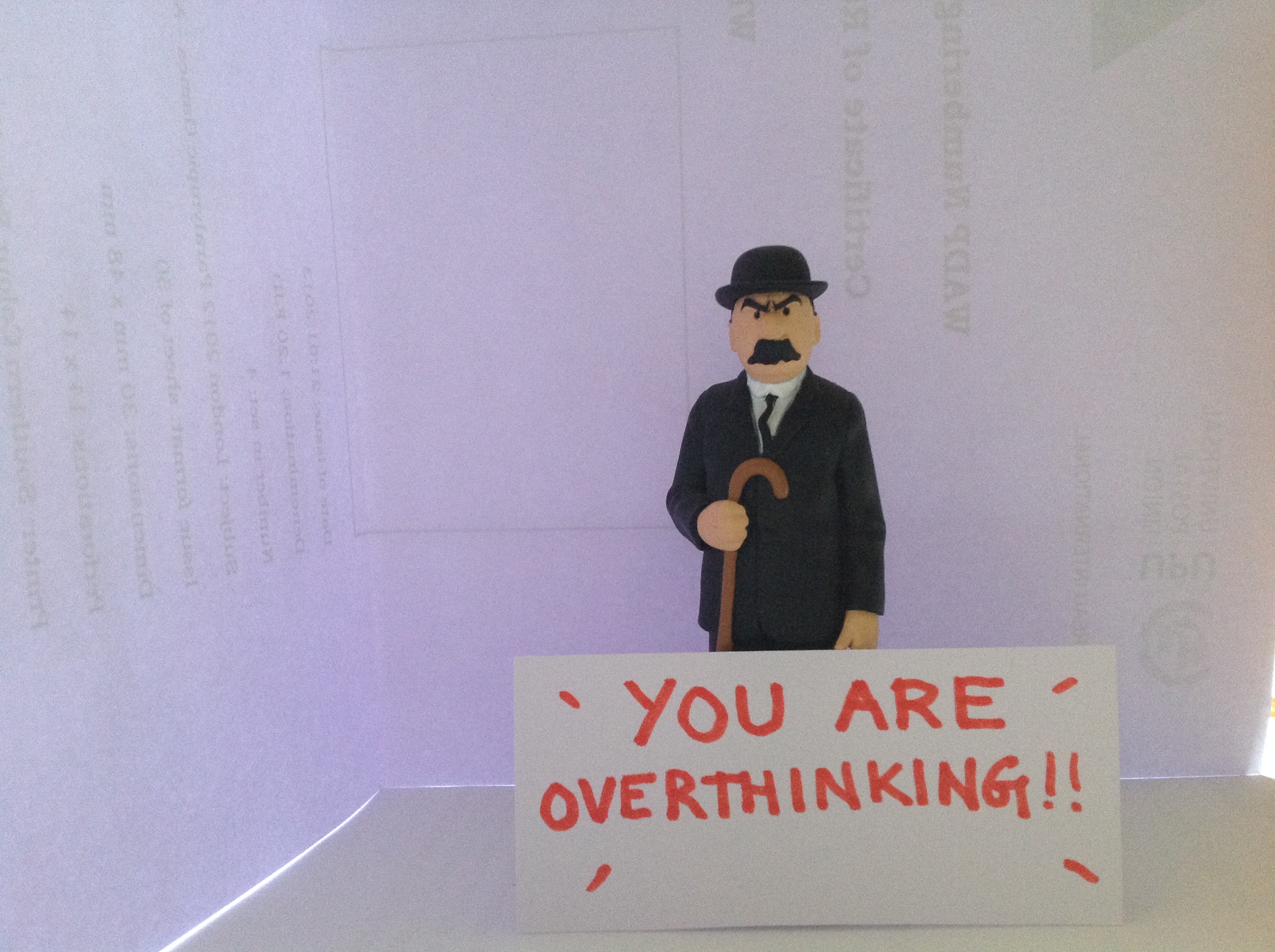
In which I am at the embarkation point of the next section of my book and find myself avoiding decision-making.
Podcast: Play in new window | Download
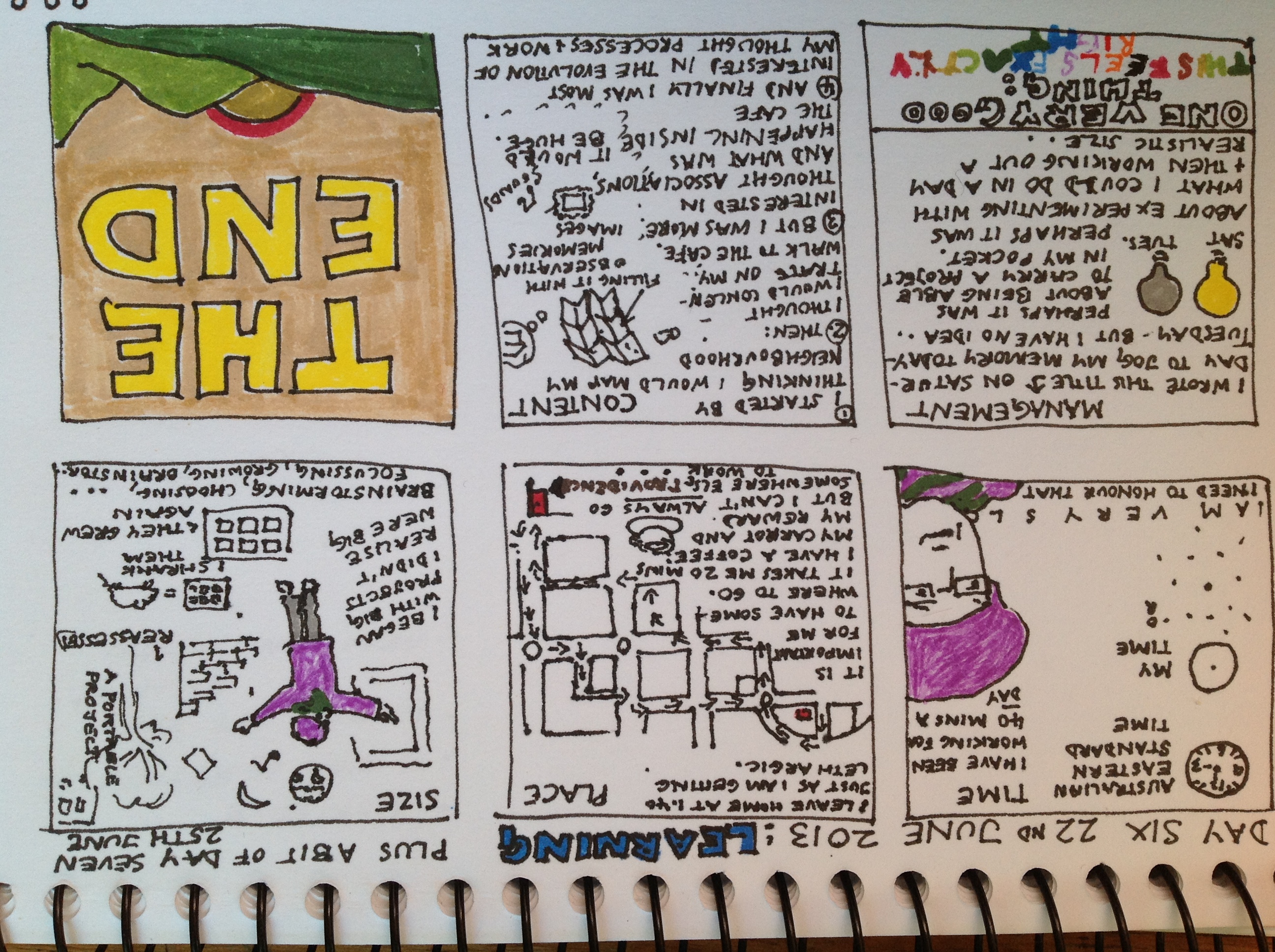
In which I trace a walk that was once a daily excursion, and revisit the project I was working on then, – a project inspired by Michael Nobbs’Get One Thing Done Course.
Podcast: Play in new window | Download

In which I celebrate my Monday off with some planning from my stoop and spending the afternoon with very old friends.
Podcast: Play in new window | Download

In which I contemplate what might be learnt from a very black cloud.
Podcast: Play in new window | Download
It is autumn. I am cradling bulbs in my paws, and thinking about onions and stockings and Great Uncle Mole.
As you can imagine, stockings were rare as hen’s teeth in Great Uncle Mole’s burrow. Instead we used old socks for the annual egg-decorating ritual; old socks, well washed. In fact, I am sure they were the same old socks we used every year. They may have even been the ones we attached to our bedsteads at Christmas.
When I say we, I am talking about all the young Mole cousins. On any other day of the year Great Uncle Mole had to be prised from his desk or armchair to spend time with his younger molekin, especially en masse. But in the afternoon of the first full moon after the equinox, he and Uncle Ratty invited the whole caboodle over to prepare eggs for Easter.
It is autumn. I am cradling bulbs in my paws, and thinking about onions and stockings and Great Uncle Mole.
The first stage involved gathering sticks for the bonfire and ferns for the eggs. At dusk we went inside and sat around the kitchen table where the old socks, string and a basket of eggs sat ready. Clutching an egg and a piece of fern in one paw, we had to manipulate the sock over in such a way that the one was firmly pressed against the other. Then we had to delicately remove the paw and tie each end of the sock tightly.
Outside the bonfire was lit and a cauldron of water and onion skins brought to the boil. It was Great Uncle Mole’s task to lower the eggs into the cauldron of water. This whole ritual had been handed down through the ages from the great Swiss Family Mole. At the time I thought it was the whole idea of decorating eggs that had come from that clan but I suspect it was only the onions that were their innovation – onions are after all peculiarly venerated in Switzerland. And I am sure humans in Southern Africa who dyed and decorated ostrich eggs 60 000 years ago had neither stockings or onions were available to them.
The first full moon after the equinox is with us now and Easter will be celebrated on Sunday, but here in Tasmania it is the wrong equinox. Here the leaves are turning, the nights are drawing in. Oestra, the goddess of Spring has no place.
The bulbs I am cradling in my paws bridge the dissonance between my European past and Tasmanian present. I look at the pictures of daffodils, crocuses, anemones, snowdrops and tulips and as I place the bulbs into the earth I can celebrate their flourishing in the Spring.
And I am thinking too of laying some eggs of sorts, eggs containing thoughts that might quietly mature during the quiet season and be ready to hatch into vibrant being when the antipodean Spring comes.

In which I talk about enjoying the process of visually representing the next chapters of my novel, and how laying my thoughts out like this enables me to see with much greater clarity.
Podcast: Play in new window | Download
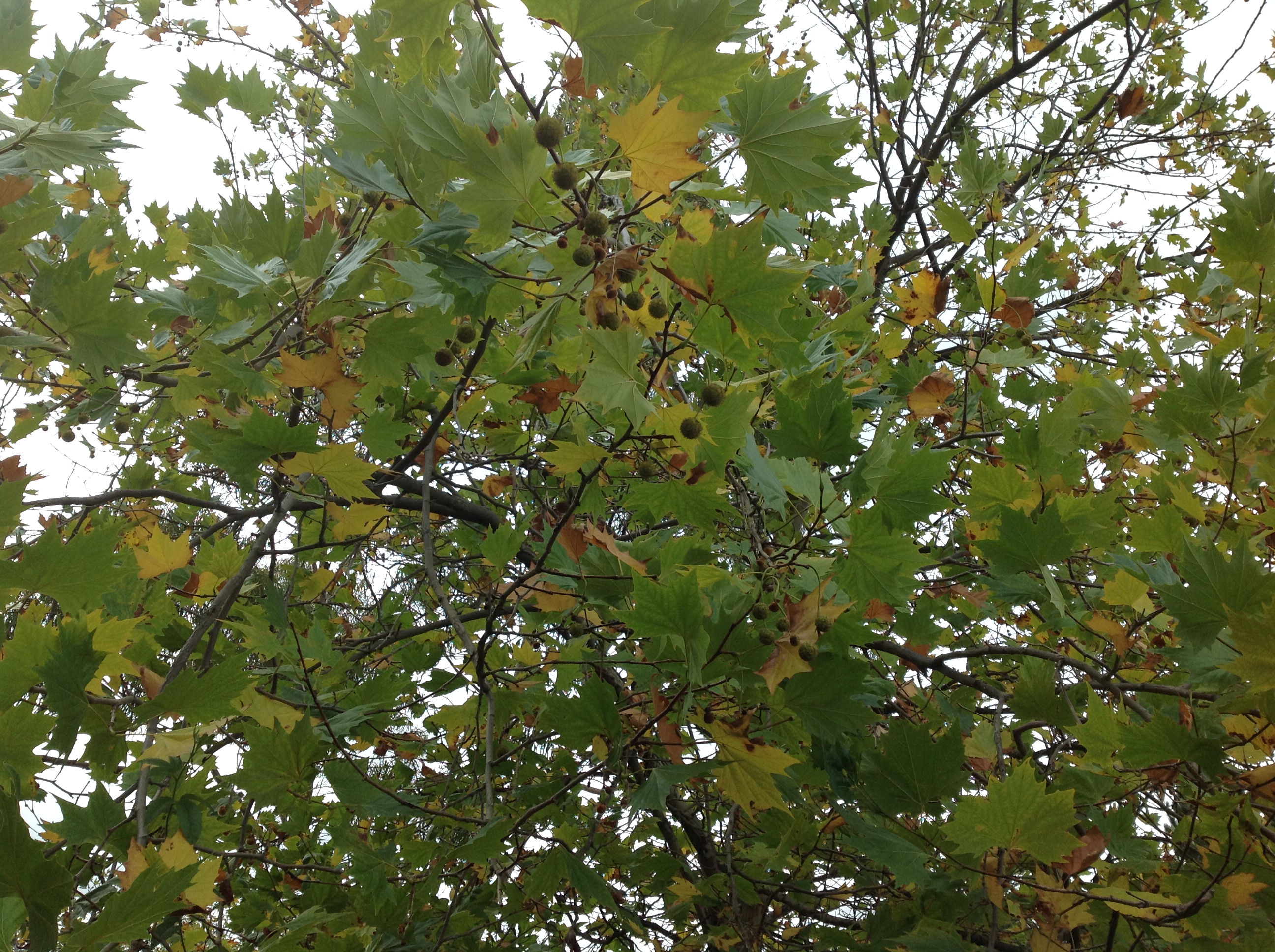
In which I talk about how while I have always celebrated new shoots and leaves, I have been rather remiss in removing my material and metaphorical deadwood.
Podcast: Play in new window | Download