Still a bit out of sync after my Sabbatical and mulling about where I am at with my writing.
Still a bit out of sync after my Sabbatical and mulling about where I am at with my writing.
A quick hello, I’m back (in two parts).
Part 1.
Part 2.
When I was a nipper I discovered I was privy to several personas. I’m not sure when this revelation first came to me, but I think it must have been around the time I found that if I stood on tippaws and stretched right up, I could reach the handle to Mama and Papa’s bedchamber. Just inside the door was a great big looking-glass that rested on the floor, and it was in front of this that I discovered my other selves.
At first I think it was facial expressions I experimented with, then gestures, then voices, all randomly, trying out my muscles. Gradually they became individualised: moles with secrets, moles with limps, moles who were flamboyant, or brave, or big, or tiny, or foreign, old or young or important or pragmatic or dreamy.Sometimes they were not even moles. I would practice the way they stood, held their heads, snorted, squealed, laughed. I would have arguments between these characters, rapidly changing from the one to the other, shrill arguments, reasoned arguments. By this time some of them had names, most were invented but some were inspired by people I had met: Herr Blini bit his nails like the refugee who played chess with Papa, Frau Schmutz had a limp and whistled out of tune like the school cleaner, Mademoiselle Chic smoked cigarillos like the supremely elegant mole who sometimes teetered into the Apothecary; Hans Peter smoothed the pelt of his head like the Lothario who rode his bike without using his paws.
And then there was Maud. I don’t know where she came from. Nor did she. Maud was a foundling. Pinned to her plain shift was a scrap of material, emerald and vermillion, raised velvet. It was all that she had of her Mama’s, nothing else, not even her name. She came to me fully formed, a tiny mole who stood very upright, arms crossed in front of her, ready to take on the world.
By now I no longer needed a looking-glass; these personas were part of me. Or at least they usually were. Somehow the me mole was always there, and although the others were all me as well, I came to realise they came from elsewhere, too. And that sometimes they didn’t. The times they didn’t were when I most needed them.
Like the day I lost my school bag and in it my homework and was too frightened to go back to school. On days like these I was numb; I couldn’t reach my feelers out – not even to Maud.
On the day of the lost homework debacle, when a return to either school or home felt fraught with likely recriminations, I headed for the nether regions of a bookshop in town where a kindred soul in the rather formidable guise of an autocratic dame, guarded the section that held reference works, English language books and esoterica.
Madame von Heldenberg was at her secretaire; beside her a tall glass of steaming dark coffee delivered by an Italian mole who ran the cinema next door. I was too young for coffee but when she saw my distress she sat me down and gave me a golfball sized, black and gold striped humbug from a jar that was refilled every time her son-in-law returned from a trip to England. And once I had my mouth full and couldn’t possibly answer her, she asked me what was the matter.
I had quite calmed down by the time the humbug had reduced enough for me to articulate my words, but what came out was still a jumbled muddle of losing my homework and my personas all at once.
‘Lost’, said Madame von Heldenberg as if that summed up the whole catastrophe. It did. ‘You know, words can take on a personal meaning that has nothing to do with etymology.’ I didn’t know what she was talking about, but she steered me over to the dictionary section. While she went upstairs with some orders, I was to find ‘lost’ in different languages. She gave me
a pencil and an old envelope to write down what I found.
I was soon in a realm quite unknown to me. Lost in English just meant lost to me, but in Latin amissum seemed to some up how I felt about the loss, as did verloren in German. The Icelandic missti did this, too, but also evoked the atmosphere into which my personas and my homework had disappeared. The Hungarian elvesztett and Slovenian izgubli seemed to identify with whom they had gone and the Maltese mitlufa suggested the possibility that they had gone of their own free wills which was not encouraging. Why would they want to leave me? It was the Sesotho laleheloa ke that restored my confidence. It sounded like a rallying cry, a word that would pierce the mists and call those miscreants back.
When I caught the tram home that afternoon, I was fortified by the two humbugs adhering to my pocket lining and I felt better able to face the music. As I squared my shoulders for the upcoming ordeal my antennae began to unfurl. I thought I heard a familiar squeak.
Maud. Good old Maud.
Before I had time to open my arms to her the conductor came to punch my ticket. He narrowed his eyes at me. ‘Aren’t you the young scallywag that left its schoolbag on the tram this morning?’ He shook his head at me and waddled his way back to the driver’s cab.
It was all there. My homework, my atlas, my pencil case and my Uufgabeheftli – the exercise book that I wrote all my deadlines in. It was this that I picked up. I opened its back page, turned it upside down and made a list:
Verloren
Amissum
Missti
Elvestett
Izgubli
Mitlufa
Laleheloa Ke
I learnt the words off by heart, chanted them. Gradually my antennae unfurled fully, my personas returned and my grey world became colourful again.
To this day, when I lose my characters, I repeat the words, annunciating slowly as if I were listing railway stations or reading the shipping news, a steady hypnotic beat. They announce that my antennae are out, that I am ready to receive. The last word, though, is different. Laleheloa Ke is a call that has to be sung from the top of my burrow mound.
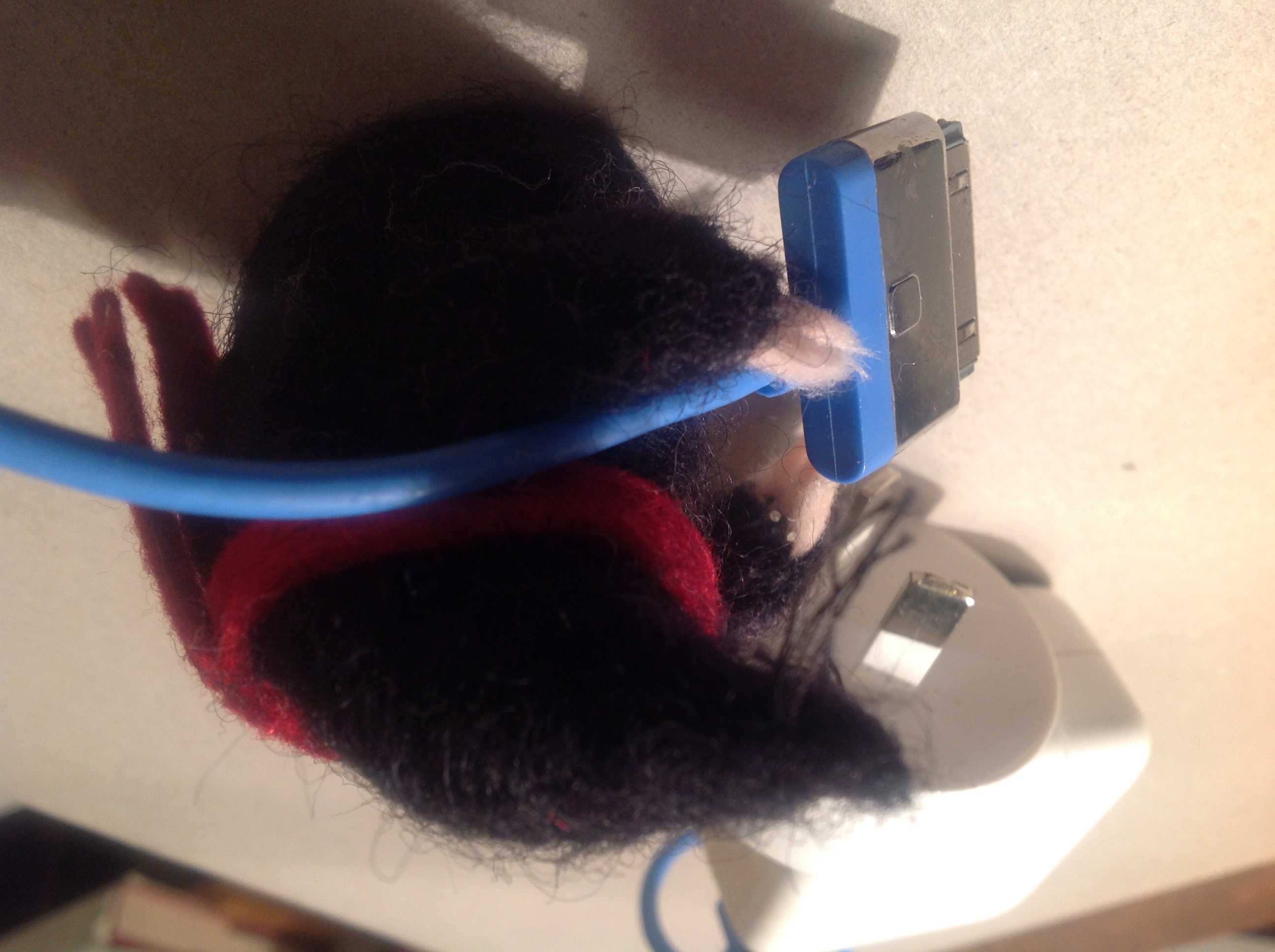
There will be no murmurs next week. Mole is on sabbatical

Lured up to Knocklofty yesterday by the beautiful evening so I am writing murmurs today and then winding down for my sabbatical next week.
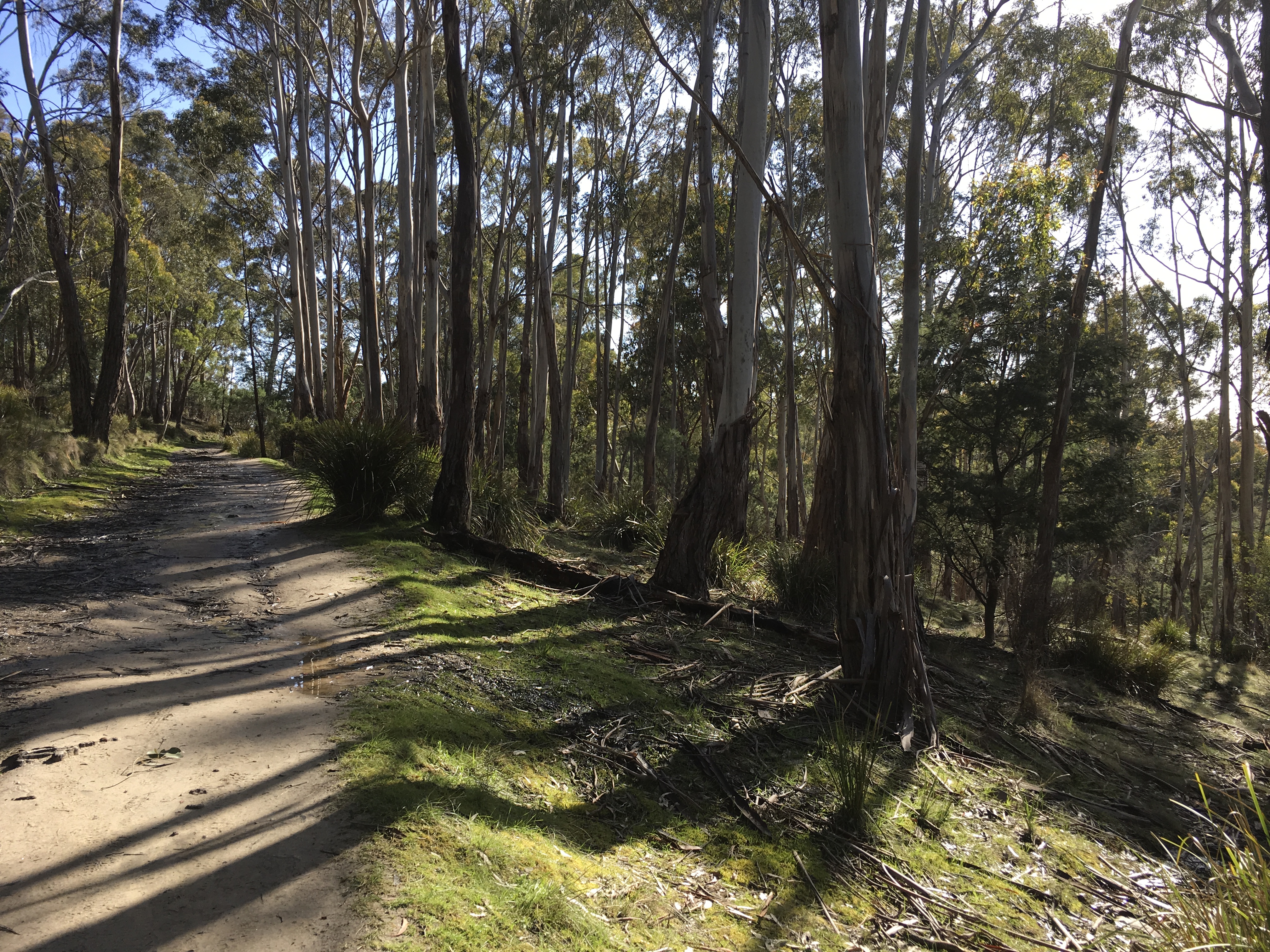
AWOL on Knocklofty and enjoying every minute of it!
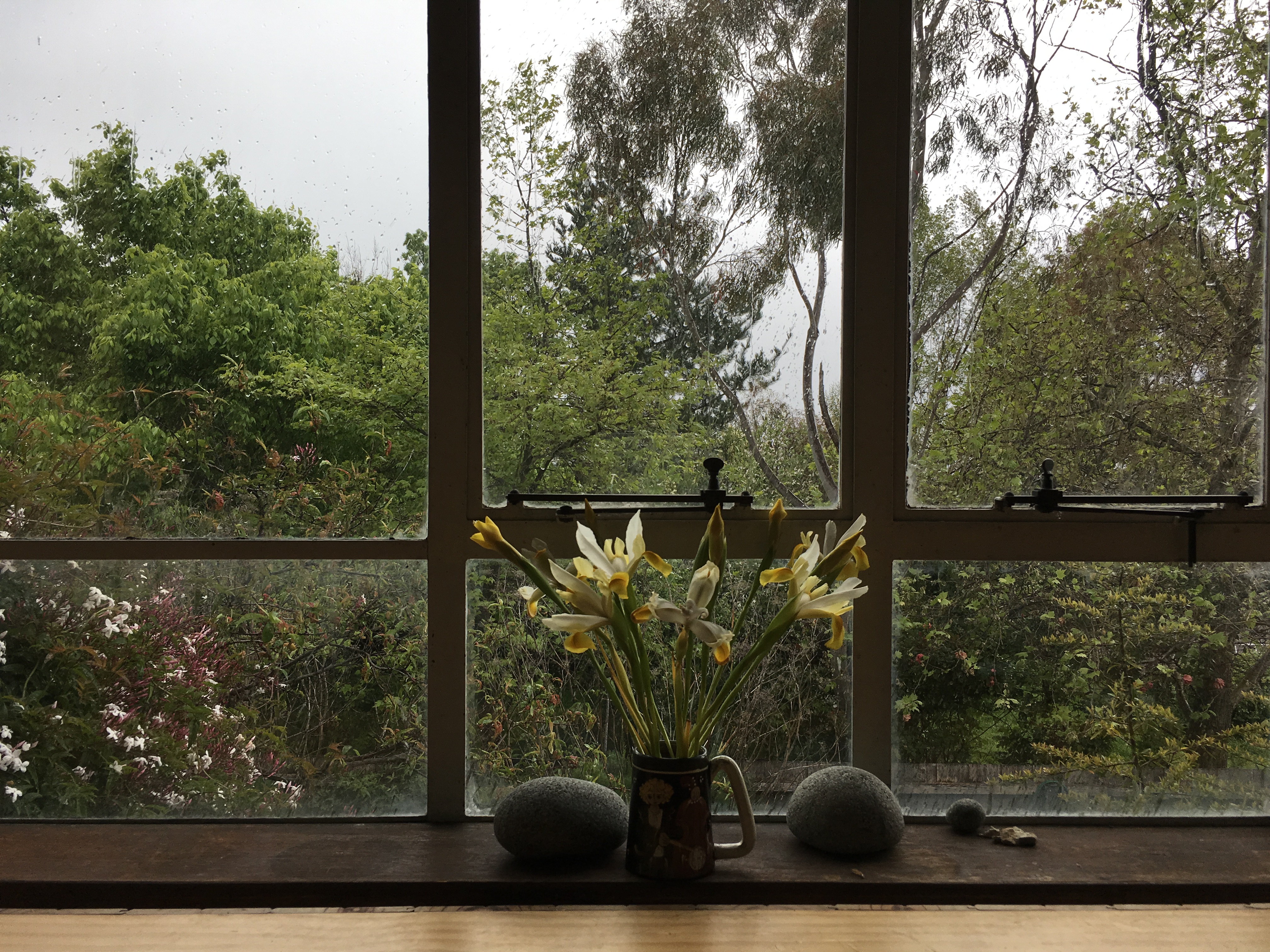
Reviewing, writing and contemplating the infinite capacity of readers.
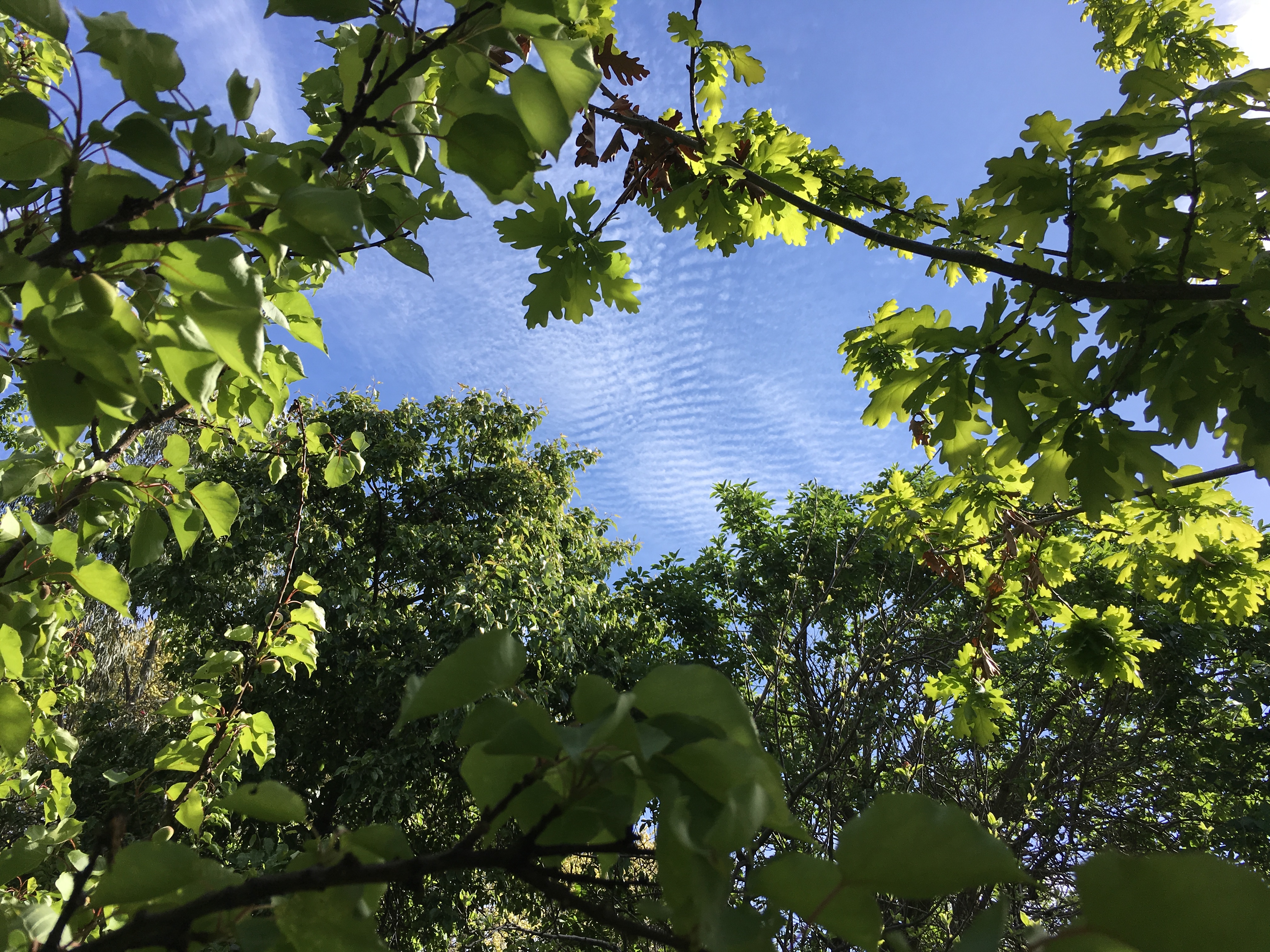
A beautiful, gentle day. Cobbling the novel and anticipating my first full walk in several months.
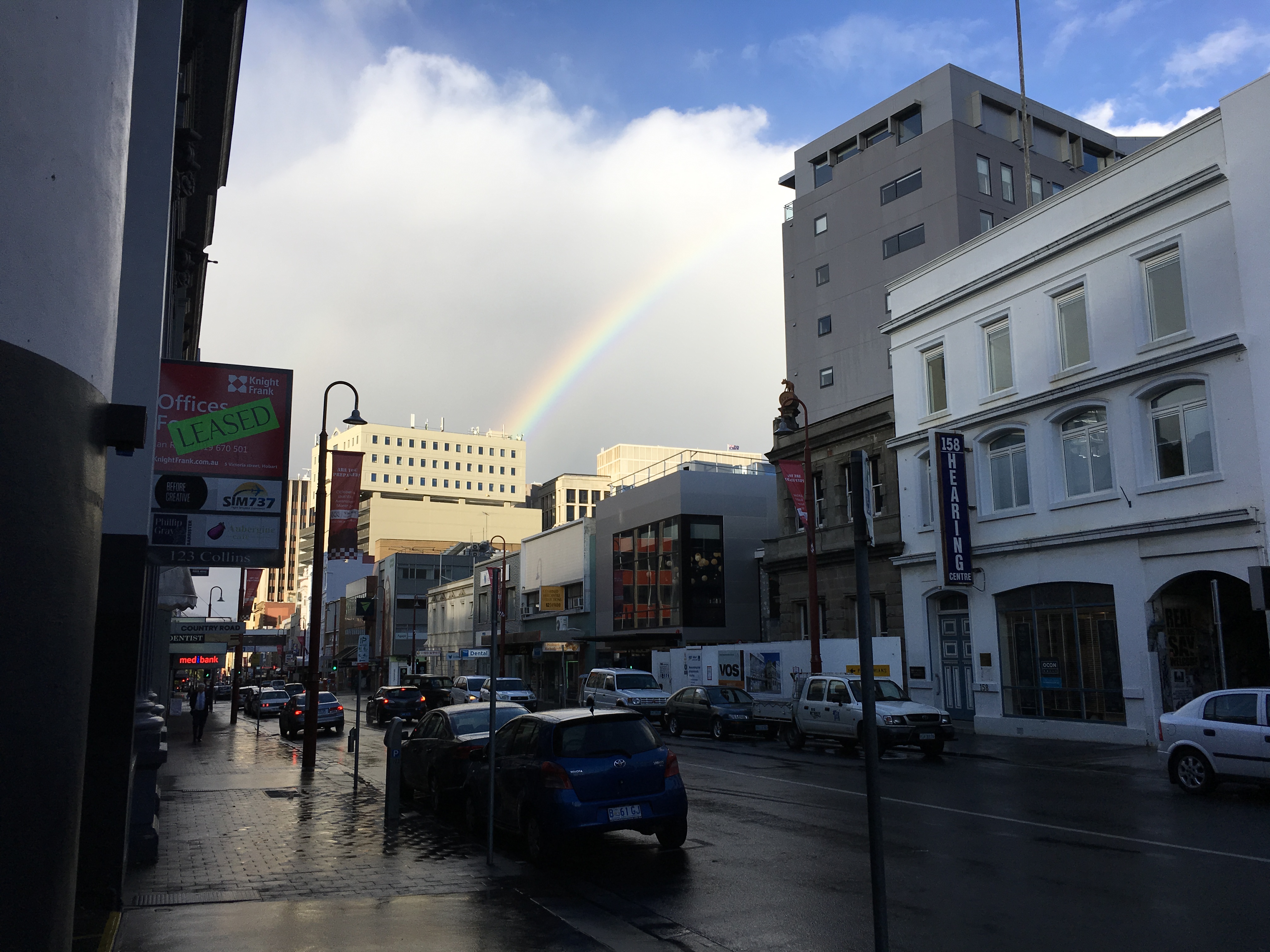
A day of all seasons. I am in the tower contemplating being gentle with myself in this waiting time.
When I mosey down to my letterbox this morning I am almost blown off my hindlegs. The weather is wild today – snow on the mountain: a hiccup in the progress of spring, a treat for those of us whose heart is in winter but whose seasons are heading towards summer. I am taken back to the weeks of blizzard that swept through Europe some seven years ago, I was staying at the parental burrow, and while much of Switzerland hunkered indoors and dreamt of Sicily I, hardly believing my good fortune, rugged up and braved the elements.
It was dark when I left the burrow and I’d barely reached the garden path before my spectacles fogged up. Snowflakes settled on the lenses. Had I not trodden this route thousands of times before I might have regarded the adventure with more trepidation. But the lack of vision allowed me allowed me to imagine my surroundings the way they had been when I was a nipper more easily almost than how they were now. The flats on the corner dissolved returned to the paddock belonging to an elderly horse called Nobu; the derelict Hotel Krone returned to its prime and opened its skittle alley for wee moles on Sunday afternoon outings; the shopping and residential complex dissolved into the orchard that had surrounded the Waisenhaus whose orphans came to school wearing scratchy grey stockings.
Much of the time it was completely silent apart from the crunch of my paws underfoot, a moped or two, skidding and spluttering, the occasional rumble of the blue train.
Hearing the blue train, imagining it lit up with night workers returning home, reminded me of another cold winter’s night when Great Uncle Mole had taken me to a reunion of retired railway postal workers. It was held in an and old unheated Nissan hut that had been a sorting office during the war, and might have been a miserable affair had they not supplied us with hot toddies (even me, a mere nipper) and, on a rigged up screen, projected that wonderful 1936 documentary Night Mail. There were cries of ‘Cor! Remember those hoists’, and ‘Look at the face on old Harrison, always was a sour bugger’, and ‘Poor old Cecil, bit the dust in the Blitz’.
Now, or rather some seven years ago, on my nocturnal walk through the blizzard, it was the W H Auden’s poetic script for that film that was accompanying me. Its rhythm matched the sound of the night mail train running over points and somehow it was now infusing my hindlegs:
‘In the farm she passes no one wakes / But a jug in the bedroom gently shakes.’ Or the hypnotic recounting of the kinds of letters being sorted on the train:
‘Receipted bills and invitations
To inspect new stock or visit relations,
And applications for situations
And timid lovers’ declarations.’
Or
‘The chatty, the catty, the boring, adoring,
The cold and official and the heart’s outpouring,…’
I was still walking this rhythm when I reached what had once been acres of allotments that allowed the residents of the neighbouring *Arbeiter Quartier to grow their own vegetables. It would have been poorly lit then, but now the streetlights were closer together, not floodlighting the building which emerges from the earth that had once nurtured cabbages and potatoes, but emphasising its importance. Adorned with the flags of many nations, this is UPU, the Universal Postal Union.
When I was a nipper, when the UPU was housed in a different quarter and the allotments remained undisturbed, I would have had no concept of the UPU had it not been for my very favourite monument in Bern. I would have taken you there, but the little park next to the Parliamentary Buildings is another twenty five minutes away, and my snout and paws are becoming numb. It is a splendid piece of work, bronze and granite, created by the Parisian René de Saint-Marceaux and brought to Bern in sixty railway carriages in 1909. Imagine a globe, the earth, the world, buttressed by a swirl of clouds and, at a jaunty angle, encircled by allegorical figures representing each continent. Each is handing another a letter. Before the UPU was founded this day 142 years ago, postage had to be negotiated separately for each of the countries a letter had to travel through to reach its destination.
Turning round now, heading towards the apple orchard belonging to the orphanage, I thought about the trunkloads of correspondence that filled every crevice of the parental burrow; and how this universal postal agreement of 1874, this extraordinary cooperation between nations, had held the far flung molekin together by conveying their letters.
My snout began to twitch. I breathed in fresh baked bread, then roasting coffee beans. Through the blur of my spectacles, I could make out lights. The Villettli loomed ahead. Two steps down, I reminded myself as I slithered one hind paw in front of the other. Not an eyelid was batted at the sight of this snowmole thawing into pools on the parquet floor. An espresso arrived, a basket of sliced Buurebrot. The blue train rumbled past, fuller this time; the inhabitants were beginning to wake up.
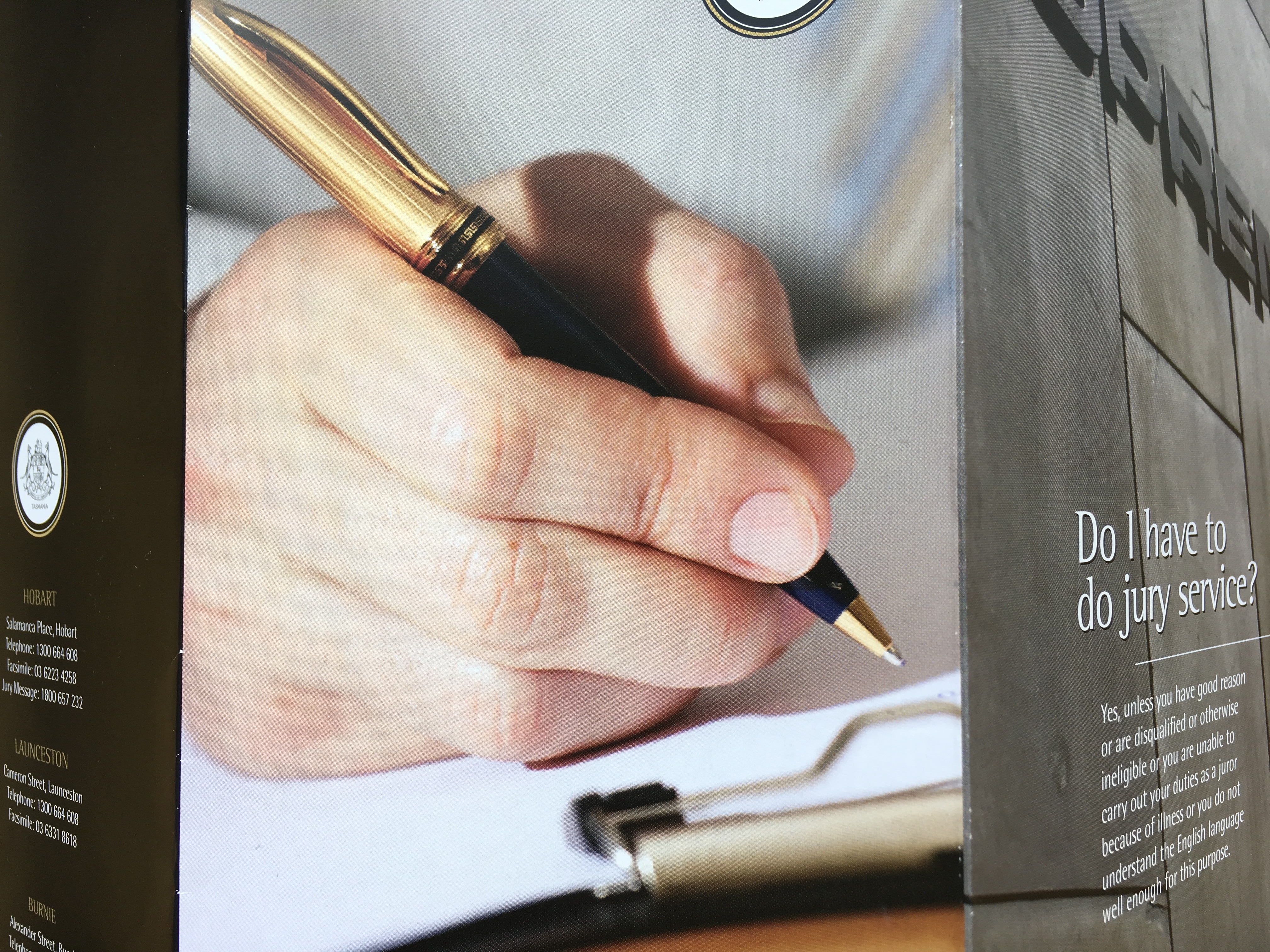
Find it a little hard to focus in the middle of injections, jury duty summons, and the anticipation of a birth.